India’s daily commute is becoming more expensive and more exhausting. Rising fuel prices, tighter traffic, and growing pollution concerns are forcing urban riders to rethink how they travel short distances.
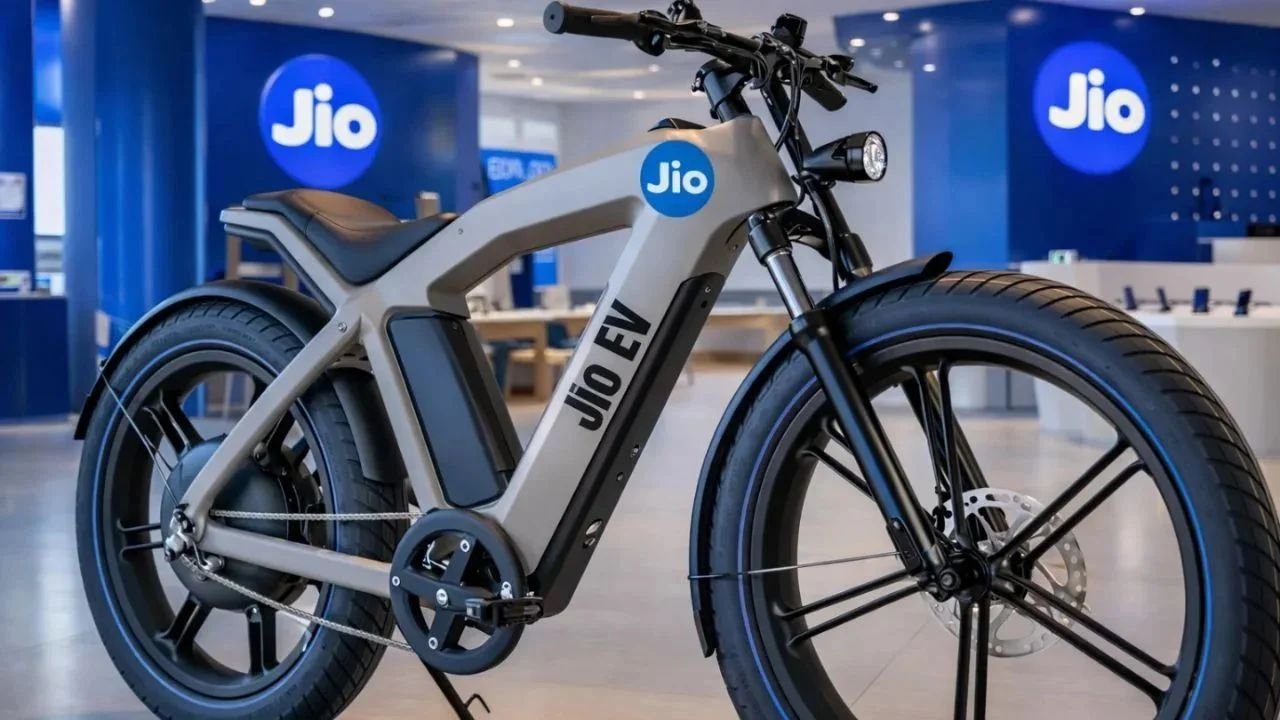
The newly introduced Jio Pedals Electric Cycle enters at a time when practical, low-cost mobility is no longer optional — it’s essential. Designed for everyday riders, this electric cycle focuses on affordability, simplicity, and real-world usability rather than flashy performance.
Quick Overview
| Category | Key Details |
|---|---|
| Type | Pedal-assist electric cycle |
| Claimed Range | Up to 170–180 km (assist mode) |
| Top Assisted Speed | Around 25 km/h |
| Charging Time | Approx. 4–5 hours |
| Estimated Price | ₹25,000–₹30,000 |
| License/Registration | Not required |
What Makes It Relevant Now

Most city commutes in India fall within a 5–20 km radius. Yet many riders rely on petrol-powered scooters or motorcycles for these short trips, increasing monthly fuel expenses unnecessarily.
This electric cycle eliminates petrol entirely. It plugs into a standard home socket, costs only a few rupees per charge, and avoids the paperwork typically associated with motor vehicles. For students, delivery workers, and office commuters, that combination makes immediate financial sense.
Practical Design for Everyday India
Built for Local Road Conditions
The frame is engineered to handle uneven roads, speed breakers, and daily wear without feeling fragile. Its upright seating posture and flat handlebar design promote comfort during longer rides.

A wide, cushioned saddle reduces fatigue, especially for riders covering double-digit kilometres each day.
Simple Maintenance Approach
Unlike complex electric scooters, the mechanical layout remains straightforward. Most local cycle repair shops can handle routine servicing, keeping maintenance accessible and affordable.
The removable battery adds convenience, allowing riders to charge indoors without moving the entire cycle.
Real-World Range and Efficiency
Designed to Reduce Charging Anxiety

In pedal-assist mode, the claimed range of up to 170–180 km stands out in this segment. Even if real-world usage varies based on terrain and rider weight, most users may only need to charge it twice a week for regular commuting.
Charging takes roughly four to five hours using a normal AC outlet, making overnight charging practical.
Minimal Running Costs
There’s no fuel expense, no engine oil, and far fewer moving parts compared to petrol two-wheelers. Over a year, savings could be significant for budget-conscious households.
Smooth and Safe City Performance
Controlled Speed for Urban Use
The 25 km/h assisted speed aligns with Indian electric cycle regulations. It’s fast enough for city lanes yet controlled enough for new riders to feel comfortable.
Power delivery is linear and predictable, which helps during flyovers or mild inclines.
Everyday Safety Features
Dual disc brakes enhance stopping confidence, while grippy tyres improve stability across mixed road surfaces. Integrated LED lighting increases visibility during early morning and evening commutes.
A compact digital display keeps essential information — speed and battery status — clearly visible.
Affordability That Drives Mass Appeal
Expected pricing between ₹25,000 and ₹30,000 positions it among the most accessible electric mobility options in the country. Flexible payment schemes could further widen its reach among students and gig workers.
Crucially, no licence, insurance, or registration requirements simplify ownership.
Why It Matters for Daily Riders
Urban mobility in India is shifting toward efficiency and cost control. For families managing tight budgets, replacing short petrol trips with an electric cycle could reduce monthly expenses meaningfully.
The Jio Pedals Electric Cycle isn’t positioned as a high-performance machine. Instead, it focuses on dependable, low-cost commuting — something millions of riders genuinely need.
If adoption scales as expected, it may play a significant role in making electric mobility accessible beyond metro cities, extending practical transport solutions to smaller towns and densely populated neighbourhoods.
For everyday commuters seeking savings, simplicity, and sustainability, this could be one of the most impactful two-wheel launches in recent memory.